

Teeth whitening is generally safe for adults with healthy teeth and gums when it is done by a dentist, or with a legal product used exactly as directed. The NHS says a dentist is the safest route. Temporary sensitivity and gum irritation are the most common side effects, and the Oral Health Foundation says they are usually short-term.
The risks come mainly from three things: products that are stronger than UK law allows, whitening by people who are not dental professionals, and whitening teeth or gums that need a dentist first. This guide covers what UK guidance says and how to whiten safely at home.
What does UK law say about teeth whitening?
In the UK, whitening products sold in shops or online may contain only a very low level of the bleaching agent dentists use. Stronger products can only be supplied to dentists, and the General Dental Council treats whitening as dentistry, so beauty salons cannot legally offer it. Avoid products sold above the legal limit.
The Oral Health Foundation advises not to buy whitening products online that list a stronger concentration than UK law allows, and to check that anyone offering in-person whitening is on the General Dental Council register.
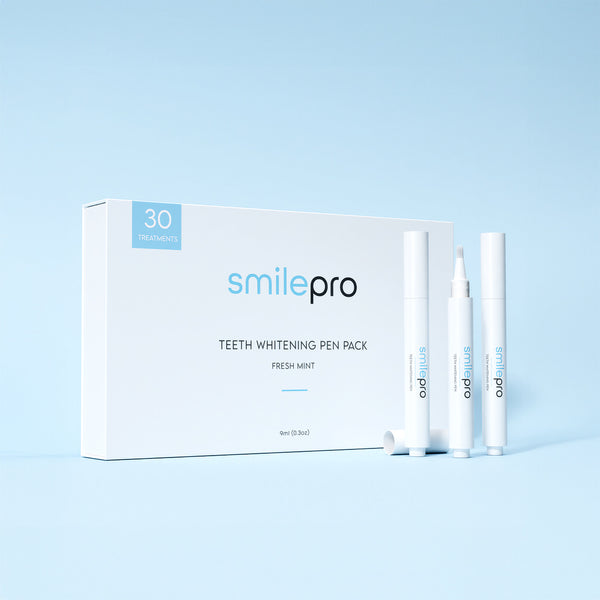
Many at-home products sold in the UK, including SmilePro's UK range, use a different whitening ingredient, PAP (phthalimidoperoxycaproic acid). Whatever you buy, look for a full ingredient list and a UK seller you can contact.
Are teeth whitening strips safe?
Strips that meet UK rules are generally safe for adults with healthy teeth when used as directed: the stated number of treatments, for the stated time, and not on sore or irritated gums. Risks rise if strips are left on too long, used more often than directed, or bought from sellers who do not follow UK rules.
The NHS is cautious about kits bought online, saying they may not work as well as dentist whitening and may harm teeth and gums. That is a good reason to choose carefully, read the instructions before your first treatment, and see a dentist first if you have any concerns about your teeth or gums.
Does teeth whitening damage enamel?
Whitening is designed to lighten the colour of teeth without removing any of the tooth surface, according to the Oral Health Foundation. SmilePro's UK gel and strips are formulated to be enamel safe. Overuse and products above the legal limit carry more risk, so follow the instructions and never exceed the stated treatment time.
If your enamel is already thin or worn, whitening is unlikely to give a good result and a dentist should look first.
Will whitening make my teeth sensitive?
Some people feel temporary sensitivity during or after whitening, often to cold, and the Oral Health Foundation says it is usually short-term. SmilePro's formula is designed to help prevent sensitivity in healthy teeth. If your teeth are already sensitive, see a dentist before whitening, as sensitivity can have a cause that needs treating first.
If you feel discomfort during a treatment, stop, rinse and pause your course. If it does not settle, speak to a dentist. You can also contact our team, who can talk you through your routine.
Who should not whiten their teeth?
The NHS says teeth whitening is not done for people aged 17 or under, or for anyone with unhealthy teeth or gums, and is not recommended during pregnancy or breastfeeding. Whitening only lightens natural teeth, so crowns, veneers, dentures and implants will not change colour. If you are unsure, ask your dentist first.
SmilePro's own rules for our UK whitening strips:
- Not for anyone under 18.
- Not for anyone pregnant or breastfeeding.
- If you have sensitive teeth or unhealthy gums, see a dentist first.
- Do not use them if you have gum disease, an oral infection or recent dental surgery.
- Do not use them on amalgam fillings without consulting a dentist first.
- Do not use them for more than 14 consecutive days without a dentist's supervision.
- Stop and see a dentist if your gums or mouth become irritated (redness, swelling or soreness).
- Do not swallow the gel.
- Avoid direct contact of the whitening gel with your gums.
- Avoid contact with your eyes.
We also recommend waiting until braces are off, as the result can be uneven.
How to whiten your teeth safely at home
Make sure your teeth and gums are healthy, ideally at a recent dental check-up. Buy from a UK seller that lists every ingredient. Follow the timings exactly, never use a product more often than directed, and stop if you feel pain. Keep up normal brushing and dental visits, which also help your results last.
A short checklist before your first treatment:
- Teeth and gums healthy, no untreated problems
- Full ingredient list on the pack or product page
- Instructions read through once, start to finish
- A timer, or a light that switches itself off
- A plan for top-ups, so you are not tempted to overdo the first course
How SmilePro approaches safety
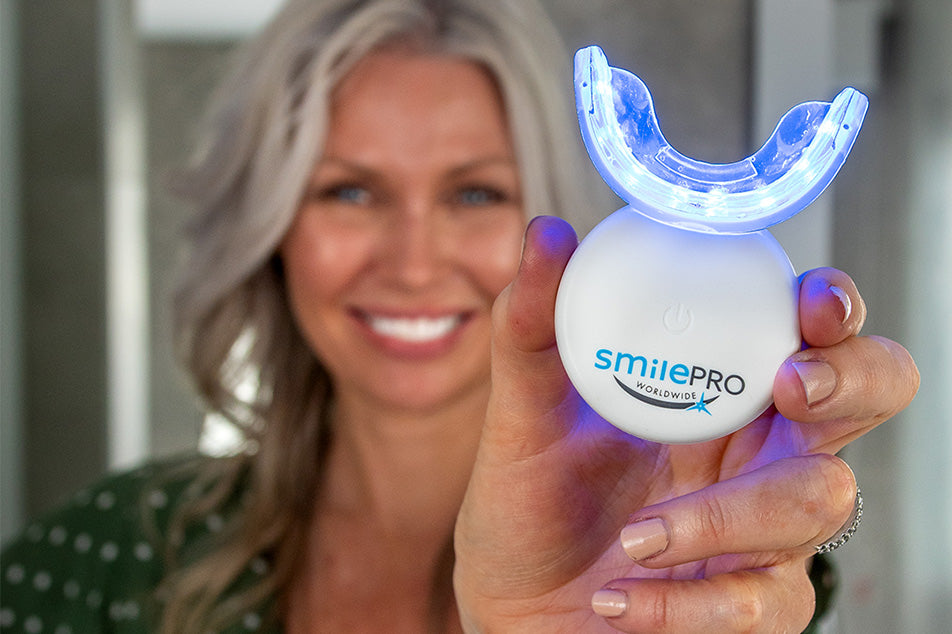
SmilePro's UK gel and strips use PAP and list every ingredient on the product page. The Advanced Kit's LED light switches itself off after 10 minutes, the gel is formulated to be enamel safe and to help prevent sensitivity, and the formula was developed by dental professionals. If your teeth are already sensitive, we recommend seeing a dentist first. After each treatment, wait 1 hour before eating or drinking anything except water.
Read next: Do teeth whitening strips work?, How long does teeth whitening last? and What age can you start teeth whitening?
Sources
This guide is general information, not dental advice. If you have any concerns about your teeth or gums, speak to a dentist.
- NHS, Teeth whitening, page reviewed 19 August 2025.
- Oral Health Foundation, Tooth whitening, reviewed April 2026.
- Oral Health Foundation, Tooth whitening and the law, read 6 October 2026.
- SmilePro, Terms and Conditions, section 4, "Product Use and Cautions" (who should not use SmilePro products).
- SmilePro product information: Teeth Whitening Strips and Advanced Teeth Whitening Kit.



Dejar un comentario
Este sitio está protegido por hCaptcha y se aplican la Política de privacidad de hCaptcha y los Términos del servicio.