
Not for whitening strength, on the evidence so far. In laboratory studies that tested PAP and peroxide side by side, peroxide gels usually whitened teeth more, and one study found that PAP mainly removed surface stains while hydrogen peroxide went on to whiten the teeth further. Results also vary a lot from one PAP product to another, and there are very few studies in people. PAP's strengths are elsewhere: lab studies have found little or no effect on enamel, and it can be sold for use at home, while UK and EU law limits home products to 0.1% hydrogen peroxide, a level the Oral Health Foundation says is too low to noticeably change the colour of teeth.
For most people, then, the choice is PAP at home or peroxide through a dentist.
What is PAP?
PAP, short for phthalimidoperoxycaproic acid, is a whitening ingredient used in many at-home products. It is an organic peroxy acid, a different chemical from the hydrogen peroxide and carbamide peroxide dentists use, but like them it whitens by oxidising the coloured molecules in stains. SmilePro's gel and strips contain no hydrogen peroxide or carbamide peroxide, which is what "peroxide-free" means on our product pages.
What does the research say about PAP and peroxide?
Most studies are laboratory tests on extracted teeth, and most of them found that peroxide whitened more than PAP, though results varied widely between PAP products.
- A 2023 study treated coffee-stained human teeth daily for 7 days. 6% hydrogen peroxide gave the biggest colour change; a 12% PAP gel beat a placebo but by less, and the authors concluded that the non-peroxide products mainly removed stains while hydrogen peroxide whitened the teeth further.
- A 2023 study of three PAP products found colour changes from barely more than a placebo to about two thirds of the change from a 16% carbamide peroxide gel.
- A 2026 study found a PAP night gel lightened teeth by day 14 and then stopped improving, while a 10% carbamide peroxide gel worked from day 7 and kept improving.
- A 2026 study of another brand's PAP kit, with and without its LED light, found no significant whitening under its test conditions, while 10% hydrogen peroxide did whiten.
Two lab studies point the other way: researchers employed by a PAP brand reported that their gel outperformed 6% hydrogen peroxide, and a 12% PAP gel made for dental surgeries lightened teeth about as much as a 37.5% hydrogen peroxide gel. Formula and method clearly matter.
In people, a small 2025 study of 15 patients treated with PAP and a dental laser found their teeth lightened but were back to their starting colour by three months. A 2025 review concluded that non-peroxide agents show promise in the lab but need clinical studies to confirm they are safe and effective.
Is PAP gentler on enamel than peroxide?
In the lab, yes, though the gap may be small. Several studies found no erosion, softening or surface changes from PAP, while some peroxide gels caused mild surface changes. But in two of the 2026 studies the 10% peroxide gels caused no enamel damage either, and lab tests cannot fully copy the mouth, where saliva helps protect teeth.
The 2023 study also found PAP, like hydrogen peroxide, harmed human connective tissue cells in a lab dish: one more reason to keep any whitening gel off your gums.
Does PAP cause less sensitivity than peroxide?
The NHS lists teeth becoming sensitive to cold or sweet food and drink as a possible side effect of whitening.
SmilePro's gel and strips are formulated to help prevent sensitivity in healthy teeth. If your teeth are already sensitive, see a dentist before you whiten. More in our guide, Teeth whitening for sensitive teeth.
What do UK and EU rules say about peroxide whitening?
Whitening products sold directly to consumers in the UK and EU may contain or release no more than 0.1% hydrogen peroxide. Products with more than 0.1% and up to 6% can be sold only to dental practitioners, must be used first by a dental practitioner or under their direct supervision, and must not be used on anyone under 18.
- The limits include ingredients that release hydrogen peroxide, such as carbamide peroxide.
- For each course of treatment, the first use is in the dental practice; the patient can then finish the course at home.
- More than 6% is not allowed for cosmetic whitening at all.
- In the UK, the General Dental Council treats whitening as the practice of dentistry: only a registered dentist can provide it, or a dental hygienist, dental therapist or clinical dental technician working to a dentist's prescription.
The rules come from EU Directive 2011/84/EU, kept in UK law.
What does this mean if you are whitening at home?
For the biggest change, see a dentist, who can examine your teeth and supervise peroxide whitening; the NHS says kits bought online or from a pharmacy do not work as well. If you prefer to whiten at home, a PAP product is a legal option for lifting surface stains, but results vary between products. Look for a full ingredient list, no more than 0.1% hydrogen peroxide, clear timings, a clear list of who should not use it, and a seller you can contact.
What is in SmilePro's PAP formula?
SmilePro's UK and European gel and strips use a peroxide-free PAP formula. The gel, which also contains potassium nitrate and hydroxyapatite, was developed by dental professionals, and both are enamel safe and formulated to help prevent sensitivity in healthy teeth.
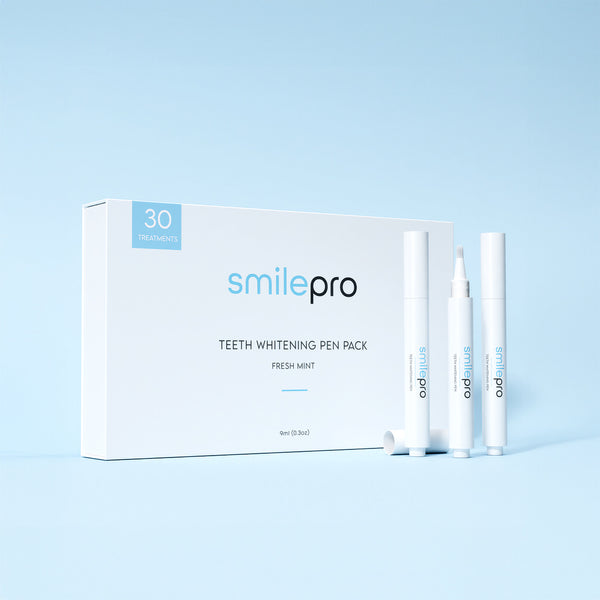
- Whitening pens (gel): sorbitol, aqua, phthalimidoperoxycaproic acid (PAP), propylene glycol, glycerin, PEG-8, potassium nitrate, hydroxyapatite, cellulose gum, hydroxyethyl cellulose, xanthan gum, sodium saccharin, menthol, methylparaben, aloe barbadensis leaf juice, chamomilla recutita (matricaria) leaf extract, punica granatum seed oil, sodium bicarbonate, propylparaben.
- Strips: PVP, phthalimidoperoxycaproic acid (PAP), xylitol, aqua, glycerin, ethylcellulose, alcohol, sodium polyacrylate, PVM/MA copolymer, xanthan gum, potassium citrate, sodium citrate, C12-15 pareth-3, hydroxyapatite, rebaudioside A, menthol.
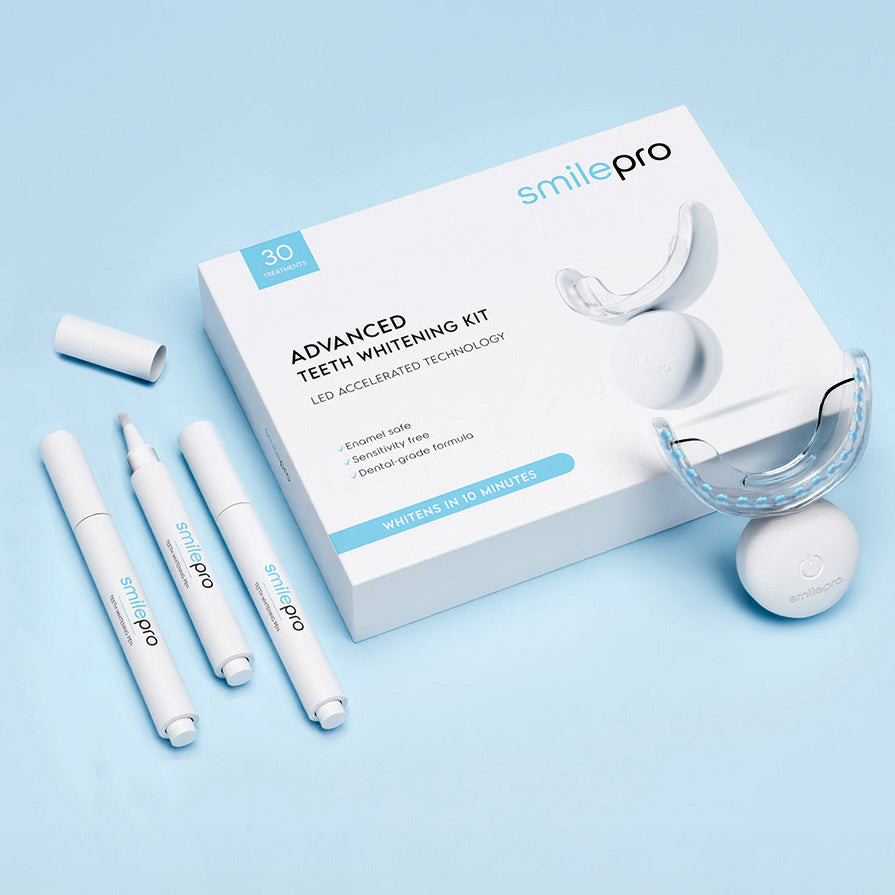
The SmilePro Advanced Kit uses the gel with a blue and red LED light, 10 minutes once a day for 7 days, for up to 8 shades whiter in 7 days. Most customers see a noticeable difference after the first treatment, and a session can be up to three 10-minute cycles. The kit gel is always used with the light. SmilePro Teeth Whitening Strips take 30 minutes once a day for 7 days, with no light, for up to 5 shades whiter. Results depend on your starting shade and staining. After each treatment, wait 1 hour before eating or drinking anything except water.
These results are our own product claims. The studies above tested other brands' PAP products, so they tell you nothing about SmilePro's results either way.
Who should not use PAP whitening?
SmilePro whitening products are not for anyone under 18, or anyone pregnant or breastfeeding. If you have sensitive teeth, unhealthy gums, gum disease, an oral infection, recent dental surgery or amalgam fillings, see a dentist first. Do not use whitening products for more than 14 consecutive days without a dentist's supervision, stop if your gums or mouth become irritated, and keep the gel away from your gums and eyes.
Is PAP whitening legal in the UK and EU?
Yes. The legal limits apply to hydrogen peroxide and ingredients that release it, such as carbamide peroxide. PAP products are sold as cosmetics and, like every cosmetic, must meet UK and EU safety rules.
What stains can PAP whitening remove?
PAP is best suited to surface stains from coffee, tea, red wine and smoking, and research suggests it works mainly on stains rather than the deeper colour of the tooth. No whitening changes crowns, veneers or fillings, or stains from antibiotics, injury or thin enamel.
How long does PAP whitening last?
There is little research on how long PAP results last; in the one small clinical study, the colour had returned within three months. For the SmilePro kit, a 10-minute top-up every 2 weeks helps keep new stains from settling in.
Shop the SmilePro Advanced Teeth Whitening Kit: peroxide-free PAP gel and LED light
Read next: Is teeth whitening safe? and At-home vs dentist teeth whitening.
Sources
This guide is general information, not dental or legal advice. If you have any concerns about your teeth or gums, speak to a dentist.
- Müller-Heupt LK et al. Effectiveness and Safety of Over-the-Counter Tooth-Whitening Agents Compared to Hydrogen Peroxide In Vitro. International Journal of Molecular Sciences, 2023.
- Grillon M et al. In Vitro Evaluation of Tooth-Whitening Potential of Peroxide-Free OTC Dental Bleaching Agents. Dentistry Journal, 2023.
- Jiménez-Díez D et al. Efficacy, pH, and enamel effects of an over-the-counter non-hydrogen peroxide gel for at-home tooth bleaching. Journal of Dentistry, 2026.
- Palandi SDS et al. Effects of phthalimidoperoxycaproic acid (PAP+) associated or not with LED irradiation as a bleaching agent: an in vitro study. Lasers in Medical Science, 2026.
- Pascolutti M, de Oliveira D. A Radical-Free Approach to Teeth Whitening. Dentistry Journal, 2021 (authors employed by a PAP whitening brand).
- Llena C et al. Phthalimidoperoxycaproic Acid (PAP) Versus Peroxides and Impact on Dental Enamel After Whitening Treatment: An In Vitro Study. Journal of Functional Biomaterials, 2026.
- Kumbhare SS et al. An Evaluation of the Efficacy of a Novel Non-Peroxide, Phthalimidoperoxycaproic Acid Teeth Whitening Agent in Conjunction with 810-nm Diode Laser. Journal of Pharmacy and Bioallied Sciences, 2025.
- Chan DCN, Cao D. Updates on non-peroxide dental bleaching agents. American Journal of Dentistry, 2025.
- Australian New Zealand Clinical Trials Registry, ACTRN12623000553673, PAP versus 10% carbamide peroxide, read 8 October 2026.
- Council Directive 2011/84/EU, hydrogen peroxide in tooth whitening products, and the UK version of the Cosmetics Regulation, Annex III, entry 12.
- General Dental Council, Tooth whitening position statement, 11 July 2016.
- Oral Health Foundation, Tooth whitening and the law, read 8 October 2026.
- NHS, Teeth whitening, page reviewed 19 August 2025.
- SmilePro product information: Advanced Teeth Whitening Kit, Teeth Whitening Strips, and our Terms and Conditions.
Last updated: 8 October 2026.




Dejar un comentario
Este sitio está protegido por hCaptcha y se aplican la Política de privacidad de hCaptcha y los Términos del servicio.